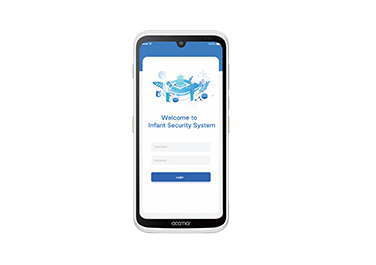


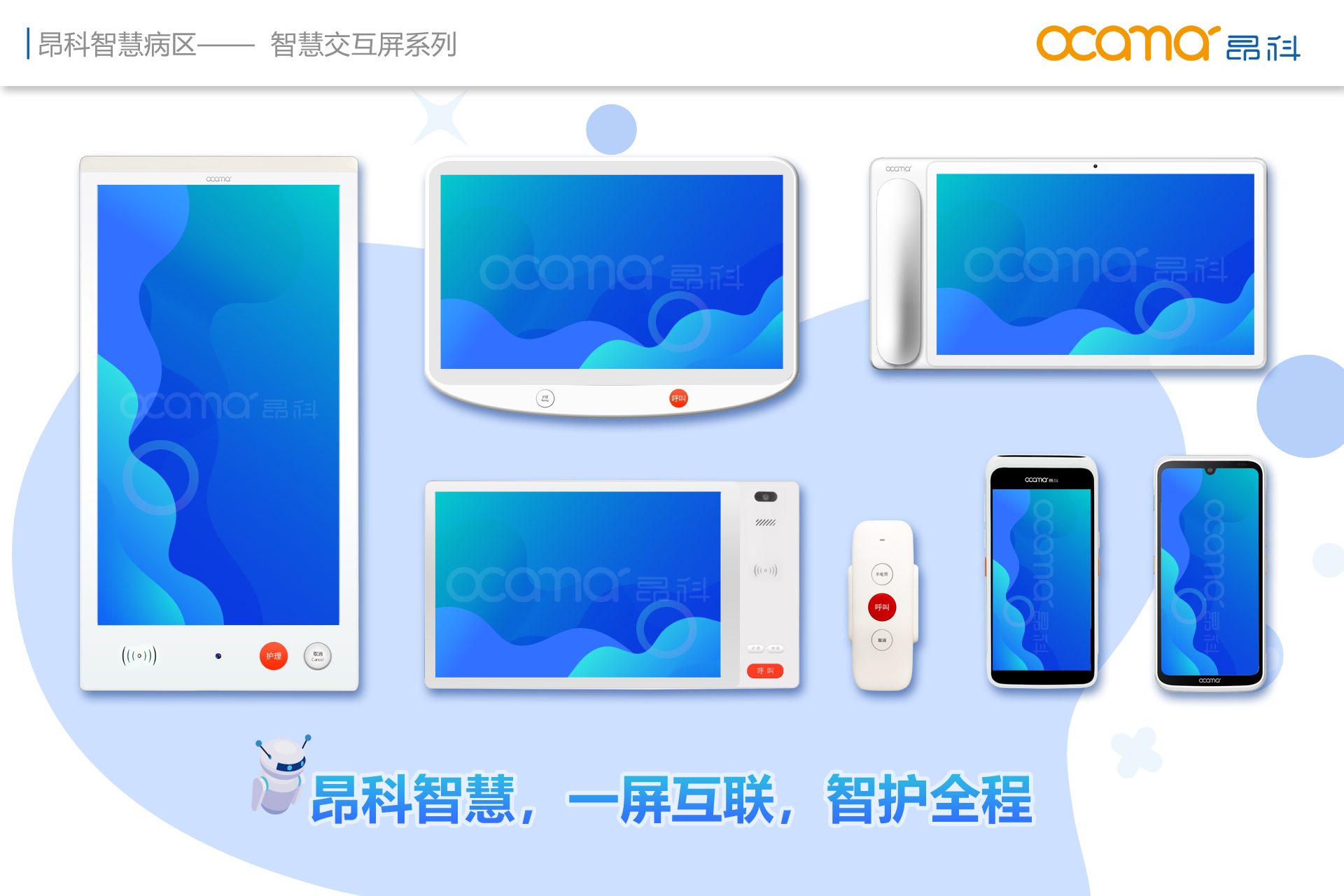
As the Healthy China 2030 Planning Outline enters a phase of in-depth implementation and medical institutions shift their focus from "scale expansion" to "quality improvement", digital intelligence has become a core track for healthcare construction. Yet the pain points in traditional nursing scenarios—isolated information silos, slow response to patient calls, and potential medical safety risks—have become key bottlenecks hindering hospital transformation. Against this backdrop, Ocamar Information Technology (Shanghai) Co., Ltd., with two decades of deep cultivation in the healthcare Internet of Things (IoT) sector, has developed the Smart Nurse Call System. Endowed with the core advantages of "full-link empowerment and full-scenario adaptation", it has emerged as the golden key to solving the challenges in healthcare construction.
I. Driven by Both Policies and Clinical Needs: Smart Nursing Becomes a "Must-Have" for Healthcare Construction
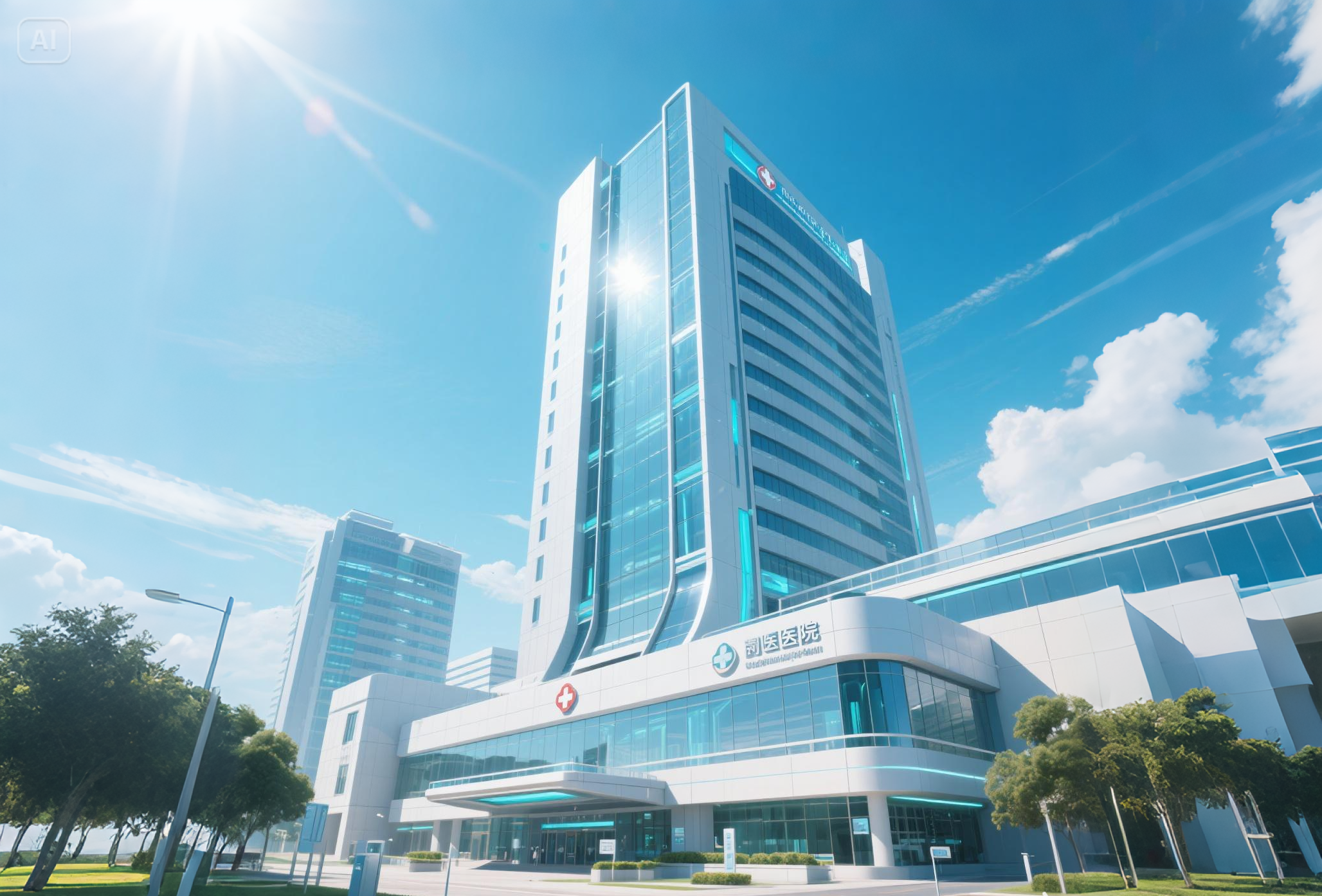
The demand for smart nursing systems in the healthcare market is no longer an optional choice, but a mandatory requirement driven by both policy guidance and clinical needs.
From a policy perspective, numerous national documents have charted the course for smart nursing: the Healthy China 2030 Planning Outline explicitly mandates "promoting the informatization of health and medical services and facilitating the sharing of high-quality medical resources"—and the smart nursing system, as a core carrier of information transmission, is the key enabler to achieve this goal; the Action Plan for Further Improving Medical Services repeatedly emphasizes "leveraging information technology to enhance patients' medical experience", while the traditional model of "calling via bell and manual errand-running" can no longer meet patients' demands for convenient communication; the Measures for Medical Quality Management imposes stringent requirements on the "traceability of medical practices", meaning information such as doctor-nurse communication and patient vital signs must be recorded in a systematic manner. Ocamar's Smart Nurse Call System precisely aligns with all these policy requirements.
From a clinical perspective, hospitals are in urgent need to address pressing pain points: constant announcements of "Level-up nursing for bed 3, surgery reminder for bed 5, drug allergy for bed 8" in nurse stations lead to omissions in manual recording and time wasted on switching between multiple systems; after a patient places a call, nurses have to repeatedly confirm bed information, making it hard to respond promptly to emergencies; data such as infusion progress and vital signs are collected through manual rounds, leaving abnormal conditions undiscovered in a timely manner. These issues not only increase the workload of medical staff but also may compromise medical safety and patient experience. At this point, a smart system that can connect information, link devices and boost efficiency has become an essential for the high-quality development of hospitals.
II. Full-Link Smart Empowerment: Restructuring the Triple Values of Nursing – Efficiency, Safety and Experience
Ocamar's Smart Nurse Call System is not a simple "stack of devices", but a full-scenario solution built around the principles of "patient-centered and medical staff-focused", fundamentally breaking the bottlenecks of traditional nursing.
1. Multi-Screen Interconnection: Unblocking the Information Loop for Doubled Efficiency
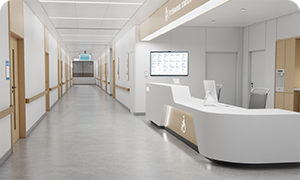
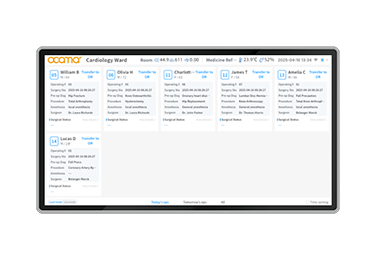
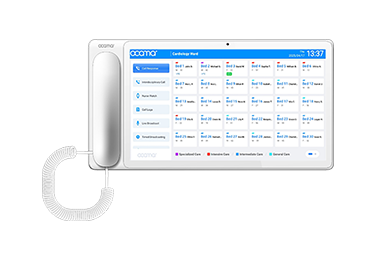
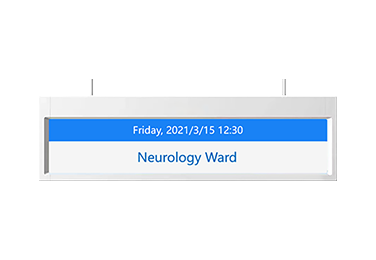
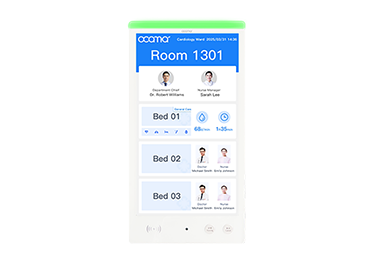
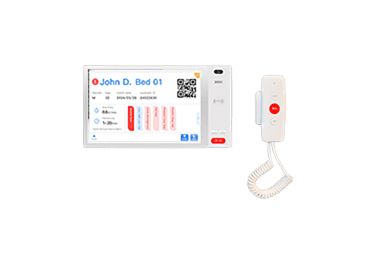
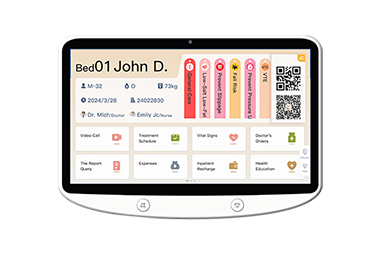
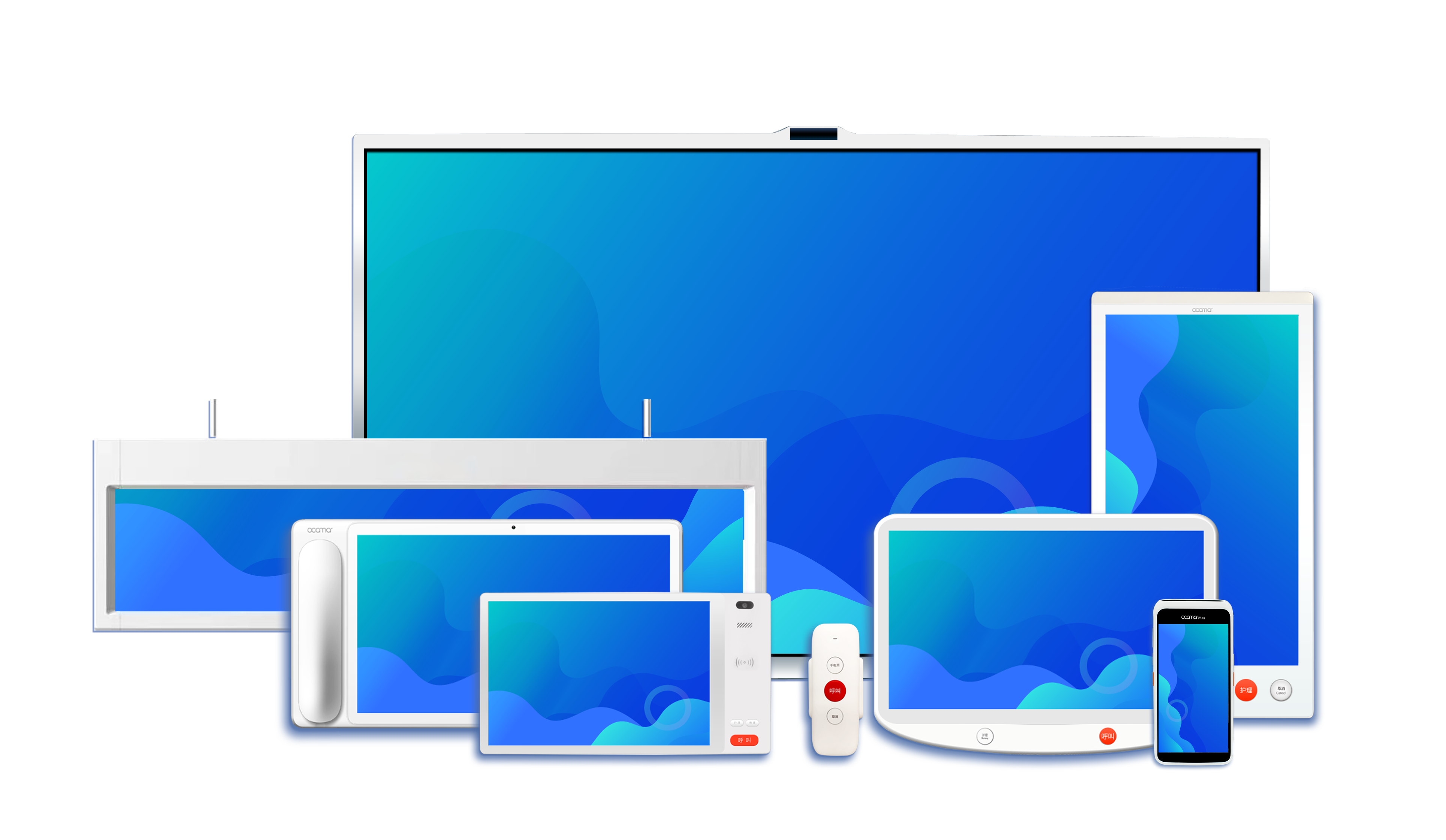
Centered on smart bedside terminals, bedhead screens, door screens, corridor screens and nurse station interactive large screens, the system builds an information network that enables "a single screen for full situational awareness": the nurse station large screen displays real-time information of all inpatients in the ward, including bed number, name, nursing level, surgical arrangement and drug allergy history, with key information marked by red alerts—ward rounds that once took 10 minutes can now be completed in 1 minute; smart door screens synchronously show the information of attending physicians and primary nurses, sparing patients' families from repeated inquiries; corridor screens update the bed numbers of calling patients and their waiting time in real time, allowing nurses to locate and respond quickly. From now on, "Information flows more, medical staff travel less" is no longer just a slogan.
2. IoT Interconnection: Building a Solid Safety Barrier for Controllable Risks
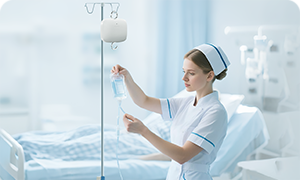
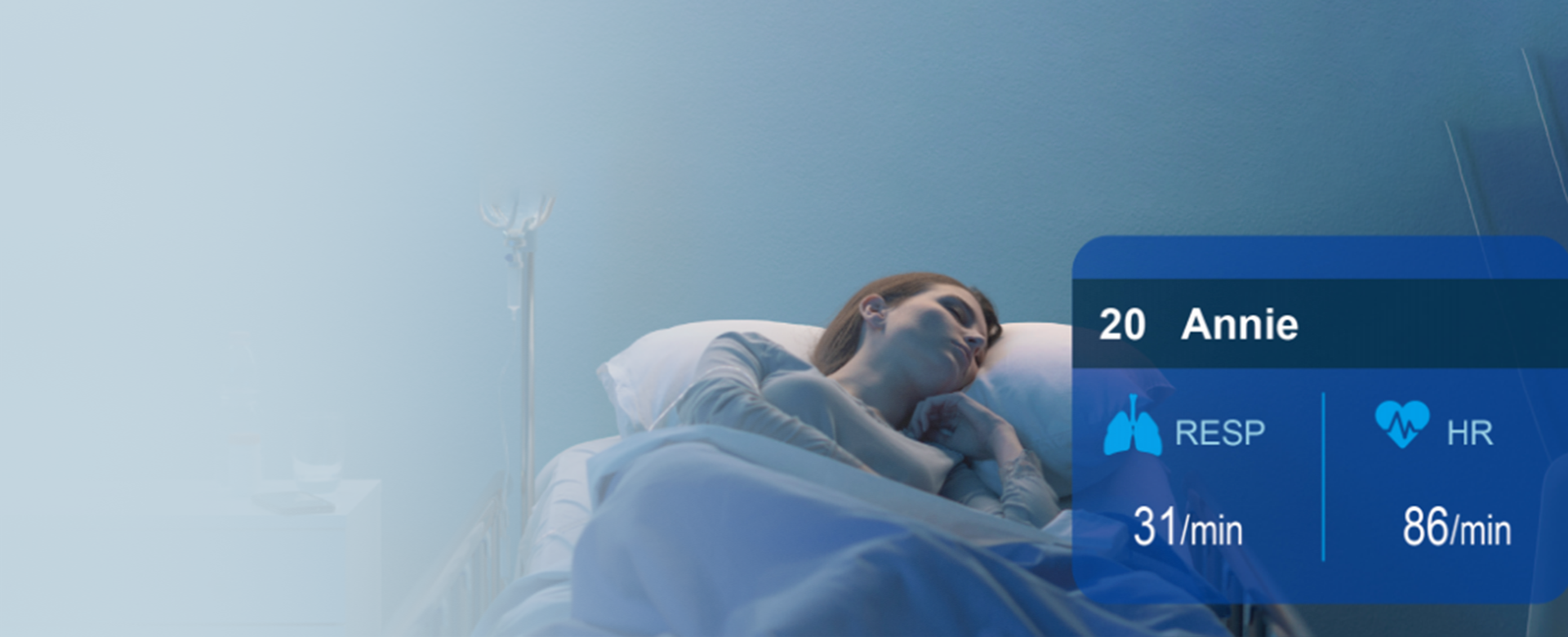
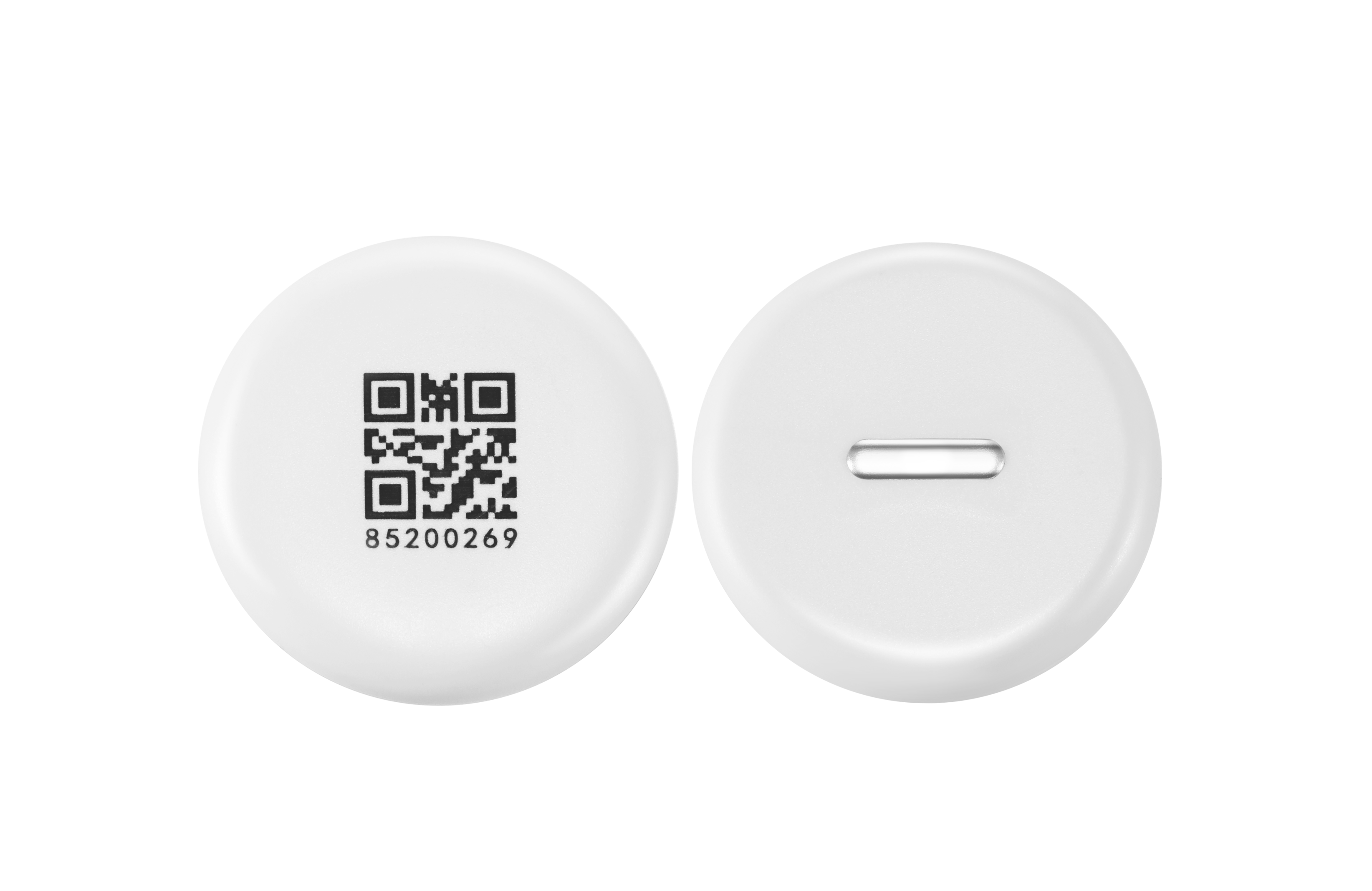
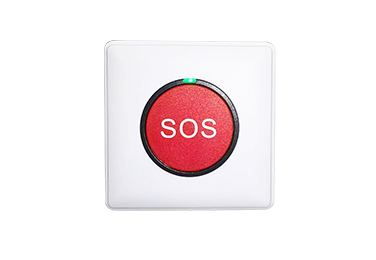
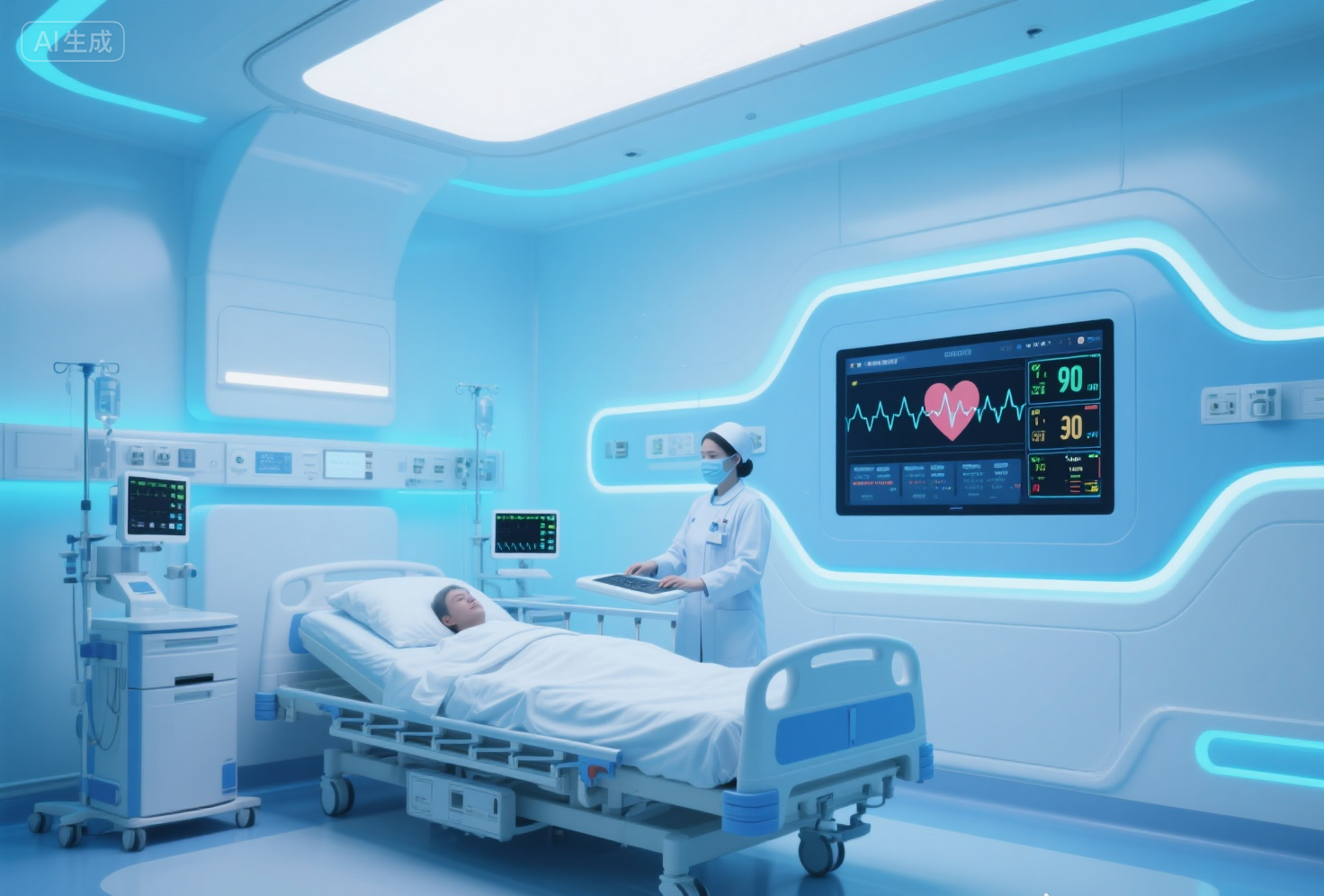
Safety is the bottom line of medical services. Ocamar's system minimizes risks through "device interconnection": infusion monitoring devices synchronize progress in real time and automatically alert nurses when infusion is about to finish; data from vital sign devices such as sphygmomanometers and pulse oximeters are automatically uploaded to bedside terminals and the nurse station large screen, triggering immediate audio and visual alarms for abnormal values; IP68 waterproof call buttons are installed in restrooms, enabling patients to trigger an emergency call with one click, with the signal synchronized to corridor screens and the nurse station, completely eliminating the risk of "unanswered calls". Shifting from "passive response" to "proactive early warning", the system builds a solid line of defense for patient safety.
3. Flexible Adaptation: Catering to Both "Current Needs and Future Development" for Hassle-Free Implementation
Hospitals feature diverse scenarios and unique needs, and the flexibility of Ocamar's system perfectly addresses the challenges of on-site implementation: in terms of installation, it offers multiple solutions including embedded, cantilever and stand-mounted types, requiring no large-scale renovation of existing wards and enabling rapid deployment even in vintage hospitals; in terms of operation, it has a simple and intuitive interface with an elderly-friendly mode that enlarges fonts and images, allowing elderly patients to easily check medical expenses and access health education content; in terms of architecture, it adopts an open design that seamlessly integrates with hospitals' existing Hospital Information Systems (HIS) via standard API interfaces, eliminating the need for hardware replacement when adding new functions in the future and saving hospitals long-term investment costs.
4. Patient-Centered Design: Extending Service Boundaries for Upgraded Experience
At its core, smart nursing is always "patient-centered". Through smart bedside terminals, Ocamar's system enables patients to enjoy "services at their fingertips": one-click access to detailed inpatient expense statements and lab results, eliminating the need to go to the nurse station repeatedly; receiving medication reminders and examination appointment notifications to avoid missing key treatment milestones; conducting video calls with family members via the remote visiting function for patients in the Intensive Care Unit (ICU) or isolation wards to alleviate psychological anxiety; and on-demand access to health education videos covering disease prevention and postoperative rehabilitation, empowering patients to shift from "passive treatment" to "proactive health management".
III. Validated in Over 1,000 Hospitals: Benchmark Cases Witness the Realization of "Smart Value"
From Grade III Class A public hospitals to high-end private medical groups, Ocamar's Smart Nurse Call System has been implemented in more than 1,000 medical and health institutions nationwide, proving its adaptability and value with tangible results.
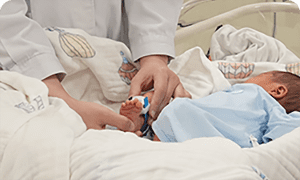
Shanghai First Maternity and Infant Health Hospital—a Grade III Class A maternal and child specialist hospital with a history of nearly 80 years—adopted Ocamar's solution for its smart healthcare construction, deploying nurse station nursing interactive large screens, smart bedside terminals and a wireless infusion monitoring system. Tailored to the needs of maternal and child patients, the system optimized health education content (such as prenatal care and neonatal care) and reduced the time nurses spend on repetitive communication through multi-screen interconnection, allowing medical staff to focus more on maternal and child care and achieving a significant improvement in patient satisfaction.
Taikang Hospital Qianhai Shenzhen—a large Grade III Class A general hospital with a planned 1,100 beds—chose Ocamar's smart ward solution from the initial construction phase, integrating nurse station interactive large screens, smart bedhead screens, an in-hospital navigation system and other facilities. The system not only supports the efficient management of the hospital's "large space and multiple wards" but also provides patients with a safe and convenient medical environment through IoT interconnection, emerging as a benchmark smart healthcare project in the Guangdong-Hong Kong-Macao Greater Bay Area.
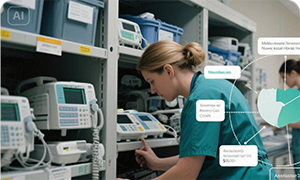
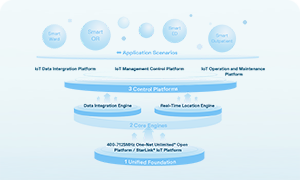
Amcare Wanliu Medical Center—a high-end medical institution focused on "holistic lifecycle health management"—introduced Ocamar's All-Network Integration and Data Analysis Platform, Asset Positioning System and Smart Ward Interactive Screen System. Deeply aligned with the institution's concept of "personalized services", the system enables customized functions such as food ordering, service evaluation and remote visiting via bedside terminals, delivering more human-centric smart services for patients during their hospitalization.
IV. 20 Years of Deep Cultivation: Ocamar, a Reliable Partner in Smart Healthcare Construction
Founded in 2003, Ocamar has always adhered to the philosophy of "Customer First, Technology-Driven", focusing on the R&D of medical-specific wireless networks and IoT technologies. It has successively launched industry-leading technologies such as WiFi Zero Roaming, the All-Network Integration and Data Analysis Platform, and the 5G+IoT Convergence Platform. Two decades of technological accumulation and validation in over 1,000 hospitals have made Ocamar a trusted smart nursing partner for hospitals.
Today, healthcare construction is stepping into a new phase of "high quality and refinement". Ocamar's Smart Nurse Call System is more than just a set of devices; it is an integrated solution for hospitals to achieve "efficiency improvement, safety assurance and experience optimization". Whether it is the upgrading and renovation of vintage hospitals or the smart planning of newly built hospitals, Ocamar can provide customized services to help hospitals avoid detours and achieve tangible results quickly on the smart healthcare track.
If your hospital is facing challenges such as nursing efficiency bottlenecks, medical safety management and control, or the need to upgrade patient experience, choose Ocamar without hesitation—empower healthcare construction with smart nursing, and let technology build a warm bridge between medical staff and patients.



